
Copper AM capabilities
Copper LPBF capability, from CAD to inspected hardware
Engineering review, DFM, thermal and flow analysis, green-laser LPBF, heat treatment, machining, finishing, and inspection for thermal, electrical, RF, vacuum, tooling, and semiconductor components.
Platform values below are published data for the green-laser LPBF platform class. Finished-part capability is confirmed for each drawing and stated in the quotation with the process sequence and acceptance plan.

Platform reference
Published green-laser copper LPBF platform range
Published values for the platform class used for copper indicate a practical screening range. Final capability depends on material, geometry, orientation, and acceptance requirements.
How to interpret published platform values
Platform values describe what the machine class can do under its own test conditions: laser wavelength and power, build envelope, layer range, and process gas. They are useful for screening whether a part fits the route.
They are not finished-part specifications. Density, conductivity, minimum wall and channel size, tolerance, and surface finish are confirmed for the actual alloy, geometry, orientation, heat treatment, and machining route, and stated in the quotation.
What a copper AM project can include
Engineering support and production scope are built around the finished component, not only the as-printed blank.
Wall, channel, fin, support, depowdering, datum, and machining-stock review, with redesign proposals when the part is not yet print-ready.
Heat-path, flow-distribution, and pressure-drop analysis under agreed boundary conditions to compare cooling concepts before the geometry is frozen.
Commercially pure copper, CuCrZr, CuCr1Zr, and other copper alloy routes subject to powder, process, and evidence requirements.
Build orientation, supports, witness coupons, internal channels, depowdering access, and process-route review.
Heat treatment, CNC machining, cleaning, polishing, plating, threads, sealing faces, and contact interfaces.
Dimensional inspection, CT, pressure or leak testing, flow checks, roughness, conductivity, and documentation as specified.
Pre-quotation engineering
Close the route before treating the price as firm
A practical route from geometry to acceptance
Define what the part must do, then select the manufacturing and evidence steps needed to produce and accept it.
1. Drawing and requirements review
The first decision is whether additive manufacturing creates enough value to justify the route. Simple copper geometry may be better machined, skived, fabricated, or brazed.
Geometry package
STEP, X_T, native CAD, and drawings for critical dimensions, datum faces, ports, sealing lands, contact pads, and machining stock.
Operating conditions
Heat load, coolant, pressure, current, RF band, vacuum environment, service temperature, and cleanliness requirements when applicable.
Commercial inputs
Prototype and batch quantity, delivery target, documentation, packaging, and export requirements.
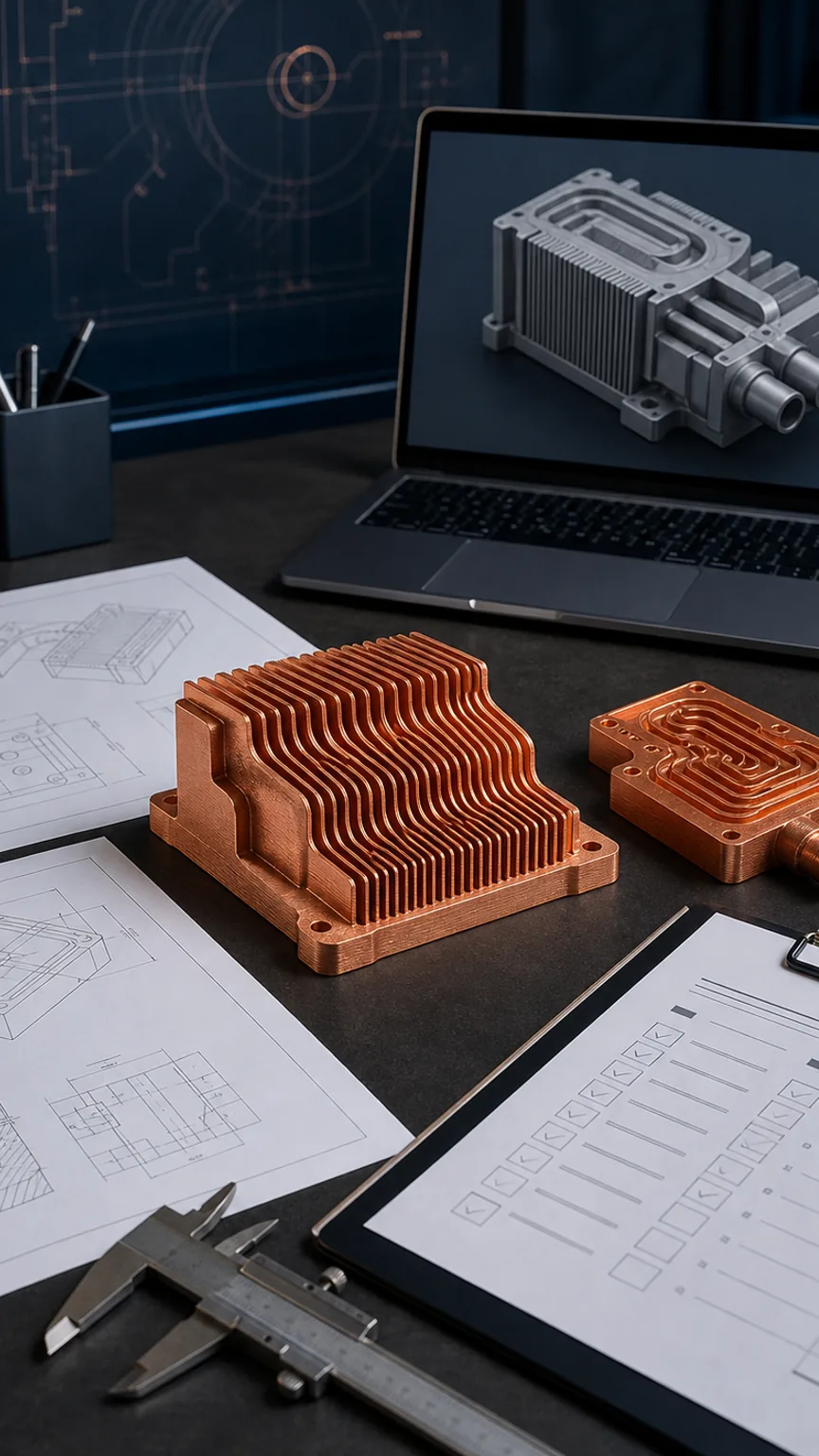
2. LPBF route and finishing plan
Build orientation, supports, powder removal, heat treatment, and CNC finishing are planned as one route because the accepted component is more than an as-built print.
Build and powder removal
Walls, channels, overhangs, drain paths, support access, and trapped-powder risk are reviewed before pricing.
Material condition
Pure copper or CuCrZr-family routes are matched to conductivity, mechanical load, temperature, and heat-treatment needs.
Finished interfaces
Datum faces, sealing lands, threads, contact pads, RF surfaces, and coating masks are defined for machining or finishing.
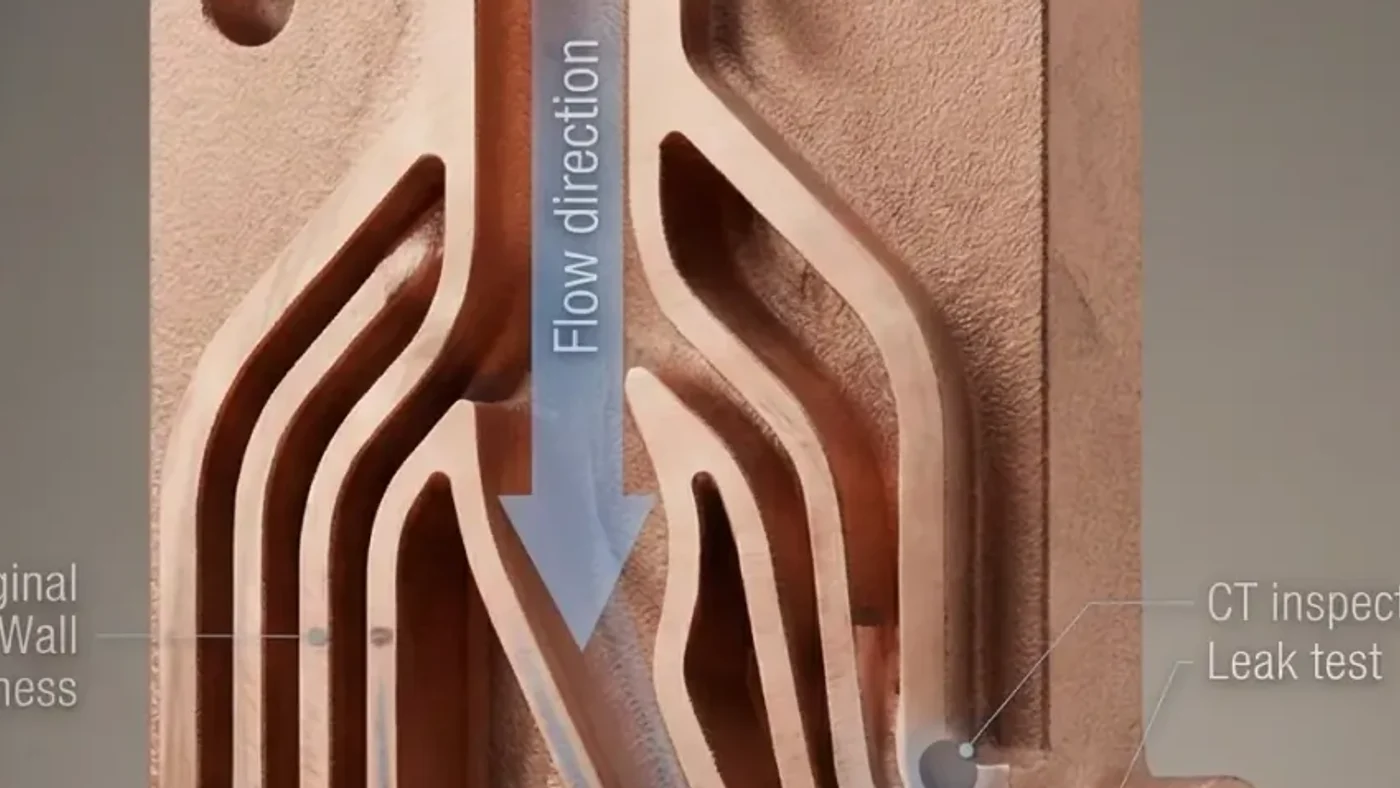
3. Inspection matched to the failure risk
Inspection is selected from the function of the part. A pressure boundary, current path, RF surface, and general prototype do not need the same evidence package.
Dimensional evidence
Critical dimensions, flatness, position, threads, sealing geometry, and machined datum relationships can be defined on the drawing.
Internal and fluid evidence
CT review, pressure testing, helium or pressure-decay leak testing, flow checks, and cleaning evidence can be scoped where relevant.
Material and surface evidence
Material certificates, density or conductivity evidence, roughness, plating, and heat-treatment records can be discussed before quotation.

Copper 3D printing capability questions
These answers define what the published capability information does and does not mean.
How is a copper 3D printing project produced?
COPPER 3DP is operated by Suzhou Como Precision Materials Co., Ltd. One engineering team manages each project from drawing review to delivery: DFM, material and build route, LPBF production, heat treatment, machining, finishing, and inspection are planned against the drawing and acceptance requirements. The quotation states the agreed production and inspection scope.
Are the listed equipment values guaranteed part specifications?
No. They are published values for the green-laser LPBF platform class, not a quotation or an unconditional finished-part guarantee. Achievable walls, channels, tolerances, density, conductivity, surface finish, and lead time depend on alloy, geometry, orientation, parameter set, heat treatment, machining, and inspection scope.
Can you help before the design is final?
Yes. A project can start from a thermal brief, a concept model, or a conventional design that needs to be adapted for LPBF. Engineering support can include DFM review, channel and fin layout, thermal and flow analysis, design iteration, and a validation plan. Deliverables are agreed for each project before work starts.
Which copper materials can be reviewed?
Typical routes include commercially pure copper and copper-chromium-zirconium alloys such as CuCrZr or CuCr1Zr. Final material availability, powder specification, heat treatment, and property evidence are confirmed during quotation.
Can machining and inspection be included?
Yes, when required. Quotations can include defined machining, heat treatment, cleaning, polishing or plating, dimensional inspection, pressure testing, leak testing, flow checks, CT review, and material documentation according to the drawing and acceptance plan.
Send the drawing before selecting the production route
Include quantity, material preference, critical dimensions, operating conditions, finishing, and inspection requirements. We will respond with a scoped quotation or focused clarification questions.