Copper cold plates
3D printed copper cold plate service for complex liquid cooling
Send CAD, quantity, material preference if known, pressure or leak targets, thermal requirements, and inspection needs. We will provide a quotation or ask focused clarification questions.

When copper AM creates value in a cold plate
A printed cold plate is strongest when the internal flow path, packaging, or assembly risk cannot be handled cleanly by conventional routing.
Micro-channels, curved passages, manifolds, or split flow paths can be reviewed when they have clear thermal and pressure targets.
Monolithic routing can reduce joints, fittings, or brazed interfaces, but leak target and inspection scope must be stated early.
Copper AM may fit cooling closer to heat sources when the drawing defines keep-outs, datum faces, and sealing surfaces.
Confirm the manufacturing and acceptance route
Confirm the green-laser LPBF envelope, material options, finishing, pressure-boundary evidence, and inspection scope before issuing the RFQ.
Representative build envelope, pure copper and CuCrZr routes, machining, cleaning, CT, pressure, and leak-test scope.
CAD, thermal load, coolant, flow, pressure drop, working and proof pressure, leak target, interfaces, quantity, and documentation.
What to send for a cold plate quote
A basic drawing can be enough for a first quote. Pressure, leak, CT, cleaning, or thermal validation requirements should be included when they affect acceptance.
Geometry and interfaces
Send STEP, X_T, native CAD, and drawings for ports, threads, O-ring grooves, sealing lands, datum faces, and machined surfaces.
Thermal and fluid targets
Include heat load, coolant, flow rate, inlet temperature, pressure drop target, working pressure, proof pressure, and leak target if known.
Quantity and timing
State prototype quantity, batch quantity, target lead time, and whether the quote should include testing or documentation.
Decision points before quotation
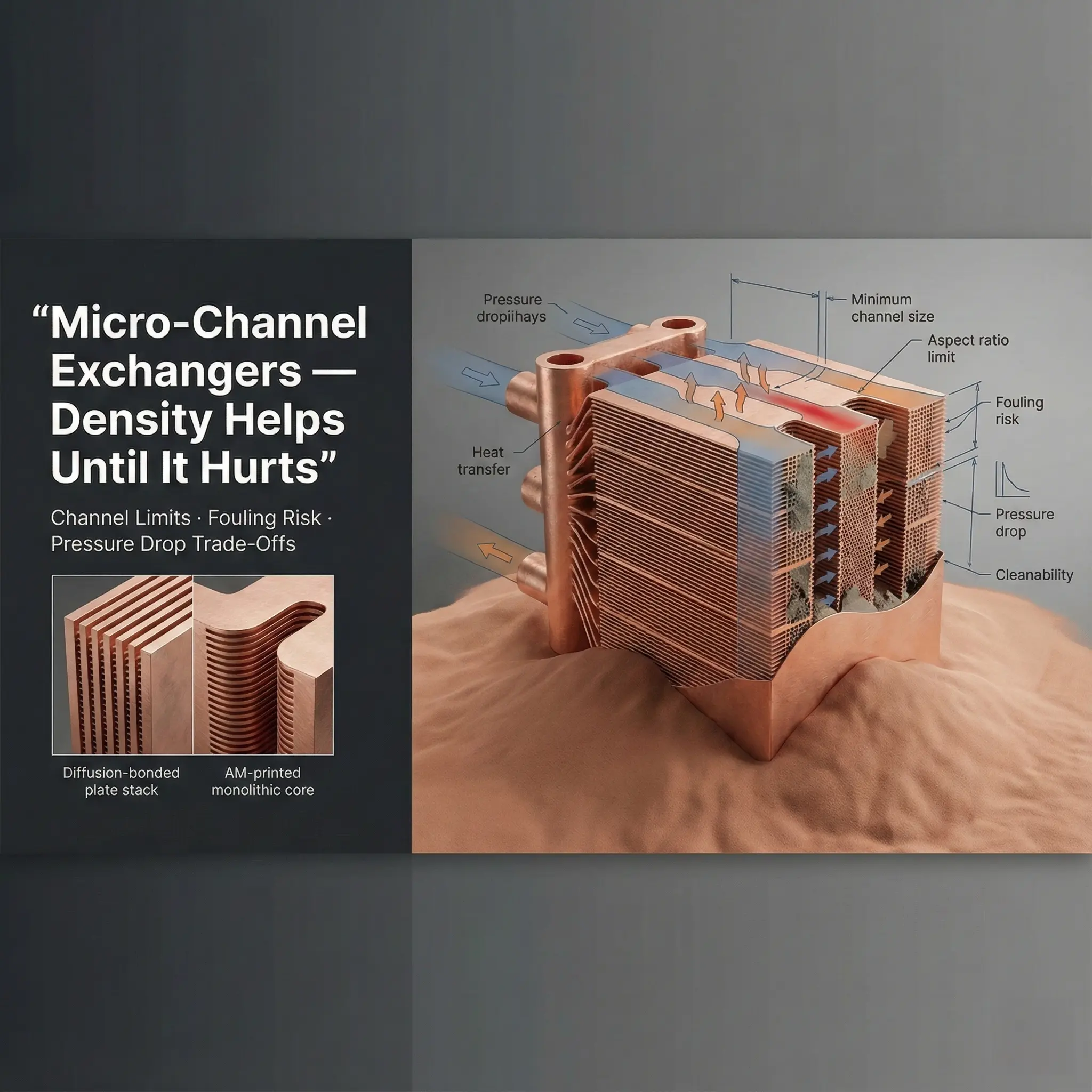
These constraints usually determine whether the quotation is straightforward, needs clarification, or requires a higher-control route.
Channel size, wall thickness, powder removal path, trapped powder risk, and CT access affect manufacturability and inspection.
Working pressure, proof pressure, hold time, leak-rate target, and test method should be stated when they matter.
O-ring grooves, gasket lands, threaded ports, and datum faces usually need machining allowance and dimensional inspection.
Pure copper, CuCrZr, or GRCop-42 should be reviewed against conductivity, strength, temperature, and post-processing needs.
Internal passages need a practical cleaning path and acceptance expectation, especially for semiconductor or vacuum hardware.
Flatness, surface finish, port details, threads, and sealing lands should be marked so they are quoted with the build route.
Related engineering guides
Use these guides to define a clear cold plate RFQ without adding unnecessary requirements.
Connect ports, seals, thermal duty, flow distribution, cleaning, pressure, leakage, and acceptance.
Use this when you need leak targets, pressure criteria, CT scope, GD&T, material, and documentation requirements in one RFQ.
Useful when the part has internal channels, pressure boundaries, or acceptance criteria that need to be stated before quotation.
Compare joint risk, thermal cycling, inspection burden, repairability, and cost before deciding whether AM is the right route.
3D printed copper cold plate RFQ questions
Use these checks before requesting pricing for a copper cold plate, microchannel cold plate, or liquid-cooled copper part.
When is a 3D printed copper cold plate better than a machined or brazed cold plate?
LPBF copper AM is strongest when the design needs compact internal channels, integrated manifolds, fewer joints, unusual port routing, or thermal geometry that is hard to machine and braze reliably. A monolithic copper cold plate can reduce joint risk, but it still needs clear pressure, leak, and inspection requirements.
What information is needed for a copper cold plate quote?
Send CAD, drawings, quantity, material preference if known, heat load, coolant, flow rate, pressure drop target, working pressure, proof pressure, leak target, and critical sealing or machining surfaces.
Can microchannels and internal passages be inspected?
CT inspection, pressure testing, leak testing, flow checks, and cleaning evidence can be considered when the requirement is defined before quotation. Channel size and access strongly affect the inspection route.
What usually makes a copper cold plate RFQ slow or risky?
Missing pressure targets, unclear leak criteria, trapped-powder risk, undefined sealing surfaces, no machining allowance, and thermal simulations that omit pressure drop or test conditions are common causes.
Send drawings, quantity, and cold plate requirements
Submit the CAD package and critical requirements. We will respond with a quotation or focused clarification questions.